Design Pillars
- Items help create or preserve tempo.
- They have differing tiers of value according to the level of effort to acquire them.
The Purpose of Items
- Items will allow players to create space for Marigold.
- They are primarily resources for Poppy stay healthy as Marigold can heal to full at any time.
- Marigold’s health is more flexible than Poppy’s, and its value is in dealing damage.
- Poppy’s health acts as a barrier to Marigold’s.
This page’s outlines The Harvest‘s handling of items, with specific regard to equipment and progression.
Equipment
I intentionally decided there would be no traditional RPG equipment in The Harvest. With a small project as this, I didn’t think that it would be an impactful return on effort invested. With roughly an hour of playtime, I decided there would be a more palpable feeling of getting stronger by obtaining new skills.
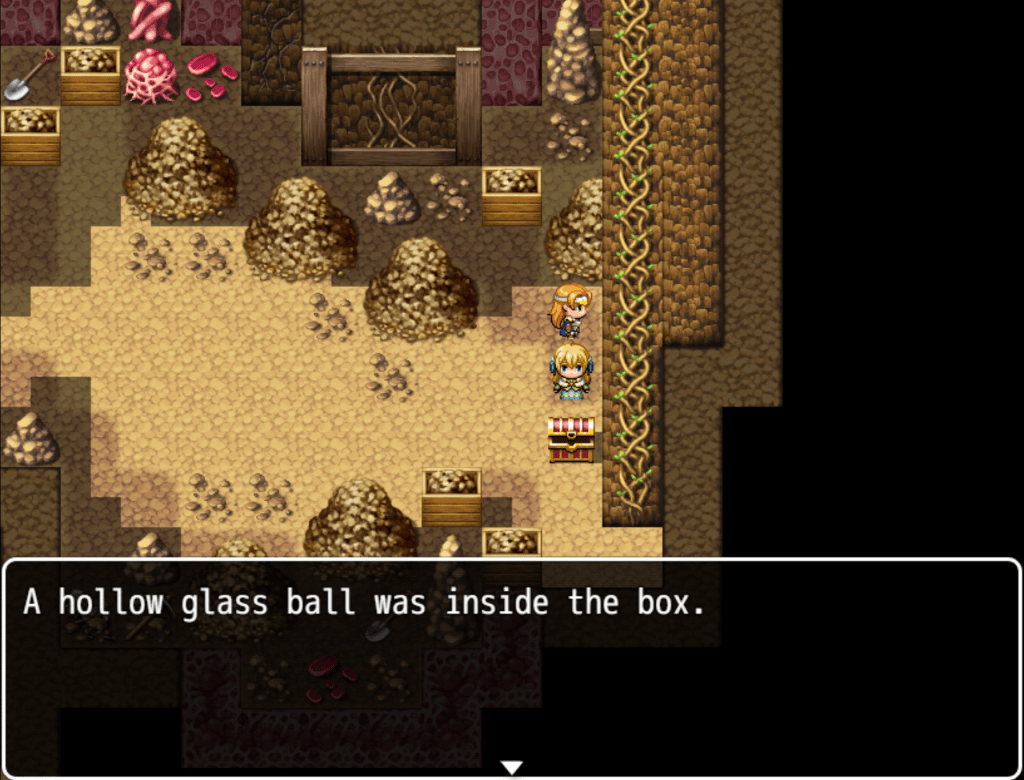
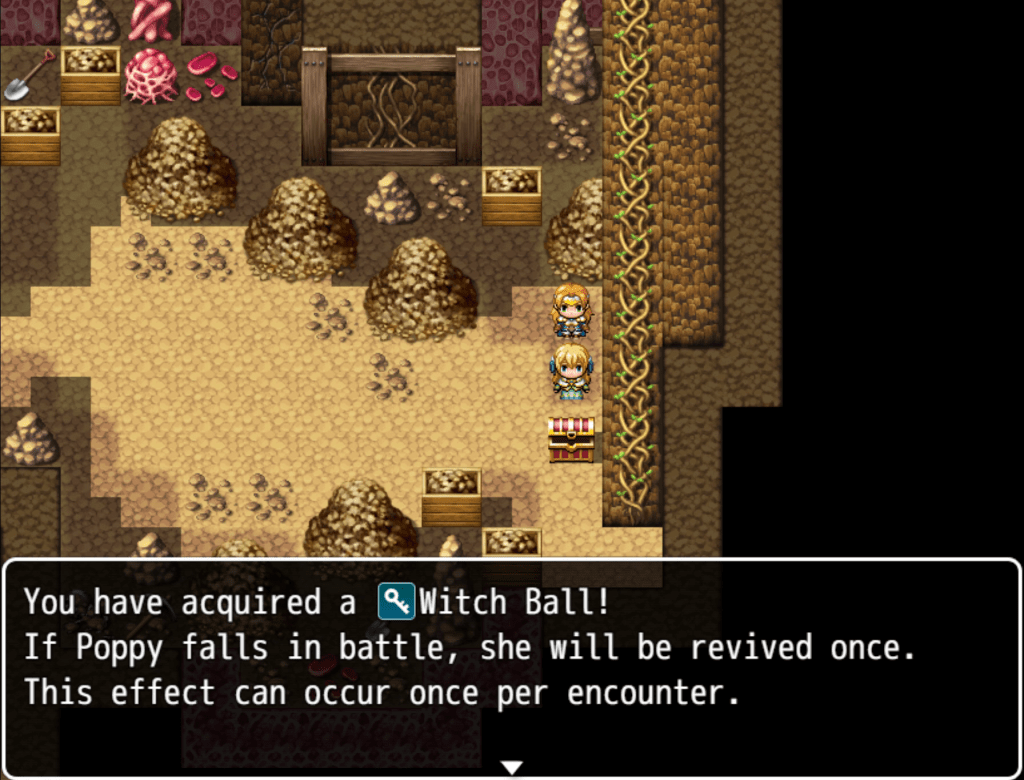
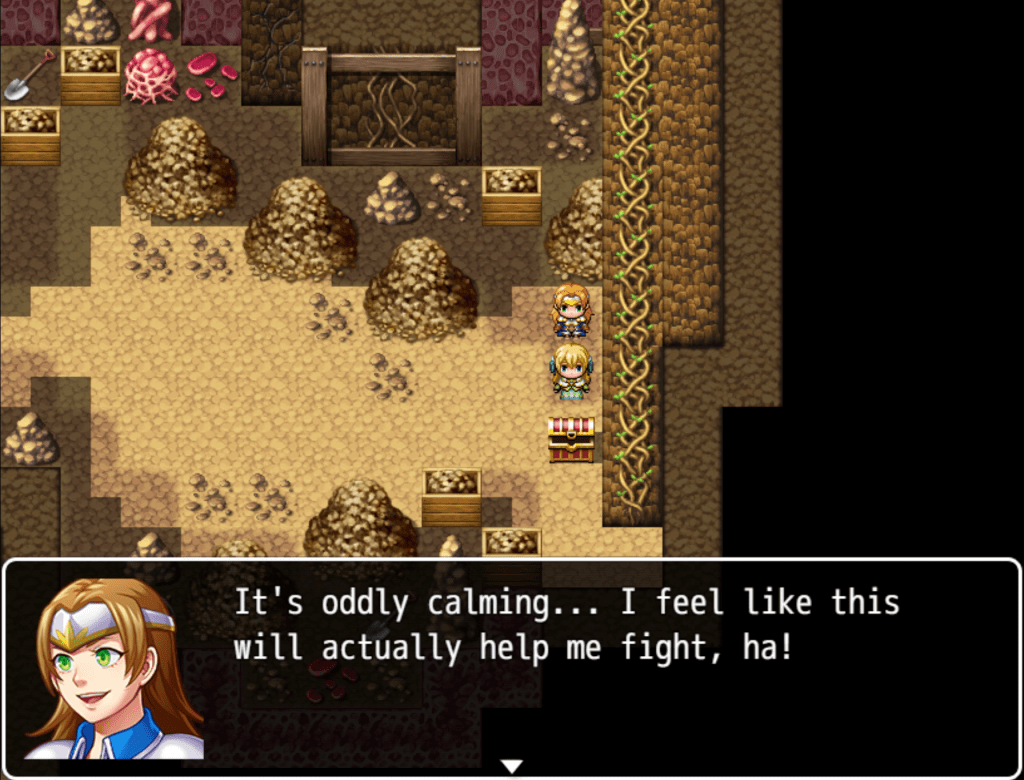
However, equipment can add flavor and depth outside of changing attributes. After considering what a player might find motivating aside from a pure power increase, I decided to include an optional side dungeon that rewards a high value passive for Poppy to keep that discovery and reward meta journey. In a full version of The Harvest, there would be more rewards like this.
Progression
Additionally, I decided against obtaining XP in The Harvest. “Progression” in the game is expressed through skill & money acquisition.
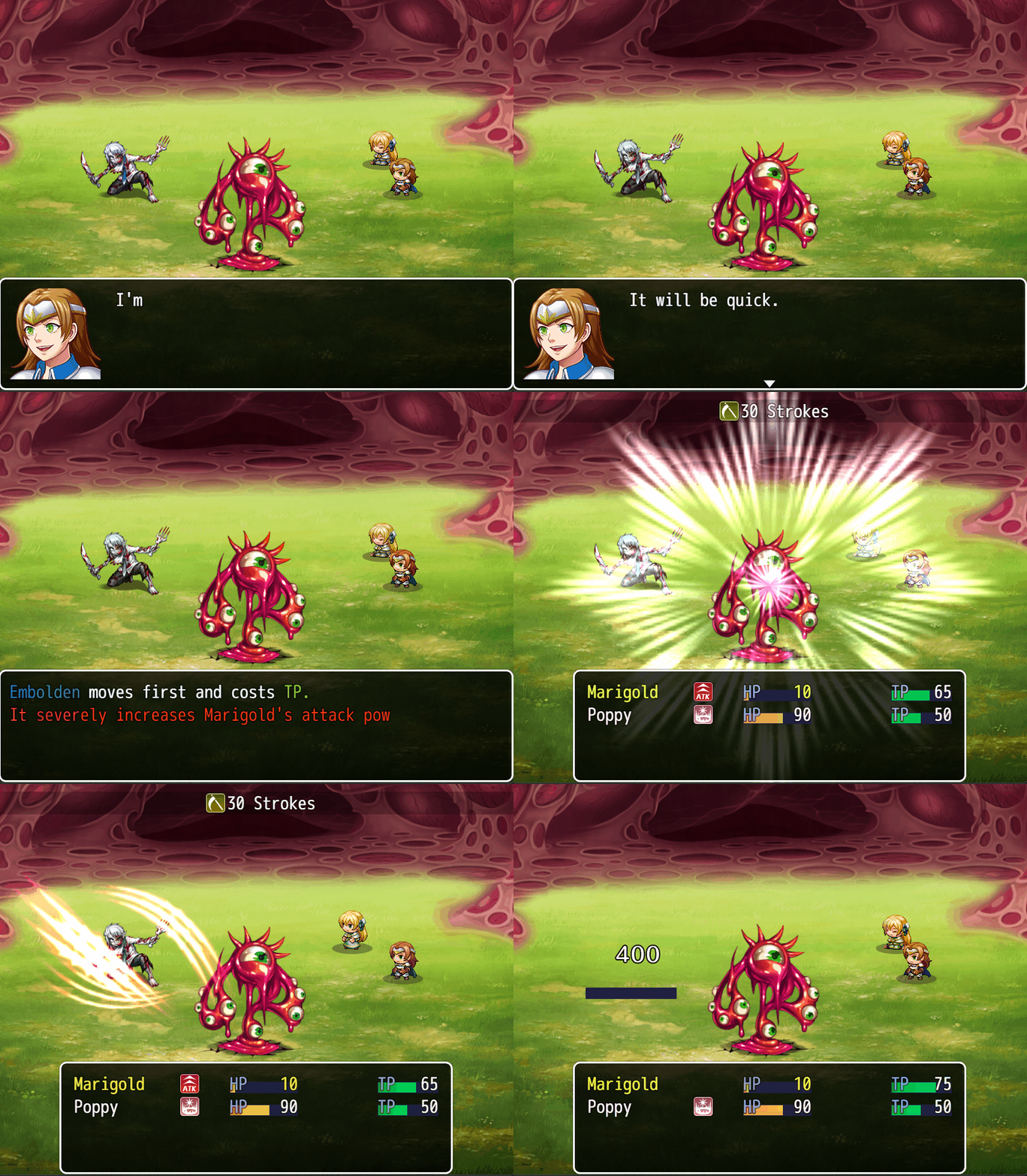
Without Experience, skill acquisition could not be tied to level up. This gave me precise control over when and how to introduce skills, and I could tie them to gameplay mechanics. Additionally, I could thread story beats into acquisition and add emotional depth.
If The Harvest had a longer runtime – ex. in a 5-8 hour range – I would consider alternatives (ex. Skill progression through X number of uses, enabling skills to behave differently by equipping Y modifier, tying leveling up & power increases to specific beats, or perhaps even using XP and more traditional equipment!).
Items
Like-items use the same icon with the exception of the Berry to denote it as a naturally occurring item. I don’t love this presentation since I think it could be easy to accidentally use one item over another when their icons are the same. However, I think it largely does the job.
In future, depending on cost & time, I’d prefer to either:
- Give every item their own icon
- OR
- Have an icon for each type of item (Ex. healing, TP restoration, resurrection) and use different colors on the icons to signify tiers
| Icon | Name | Source | Effect | Cost |
 | Berry | Bushes | Restores 30% HP | N/A |
 | Bandage | Bodies Shop | Restores 60% HP | 250 |
| Binding Cord | Chests Shop | Fully restores HP | 500 |
 | Needle of Attis | Overworld | Revives knockout | 400 |
| Fetish of Attis | Chests | Applies Re-Raise state | N/A |
 | Blood Cartridge | Chests Shop | Provides 50 TP | 1000 |
Dropped Loot
- Buy and large, a player wants to know what an item does and make decisions about it (Is this useful? What do I do with it? Can I use it here? Etc.).
- For sellable loot, I decided to use all the same icon & include a note on each item indicating it can be sold to make the calculus of “what is this for” easier.

All dropped enemy loot uses this icon.
| Name | Source | Description | Sell Value |
| Bat Wing | Bat | The flexible wing of a large bat. Can be sold for money. | 50 |
| Rat Tail | Rat | A dismembered tail with surprising thickness. Can be sold for money. | 50 |
| Thin Ooze | Corrupted Body – Red | A jar of thin, red fluid. Can be sold for money. | 100 |
| Thick Ooze | Corrupted Body – Yellow | A jar of viscous fluid. Can be sold for money. | 125 |
| Forager’s Badge | Forager | A tattered insignia representing the village Foragers. You will be compensated for turning it into a merchant. | 200 |
| Broken Horn | Behemoth | The shattered horn of a large beast. Can be sold for money. | 200 |
| Intact Horn | Behemoth Prime | An intact horn owing to its owner’s tremendous vitality. Can be sold for money. | 500 |
| Royal Rat Tail | Rat Couple | A dismembered tail worn with the scratches of many battles. Can be sold for money. | 500 |
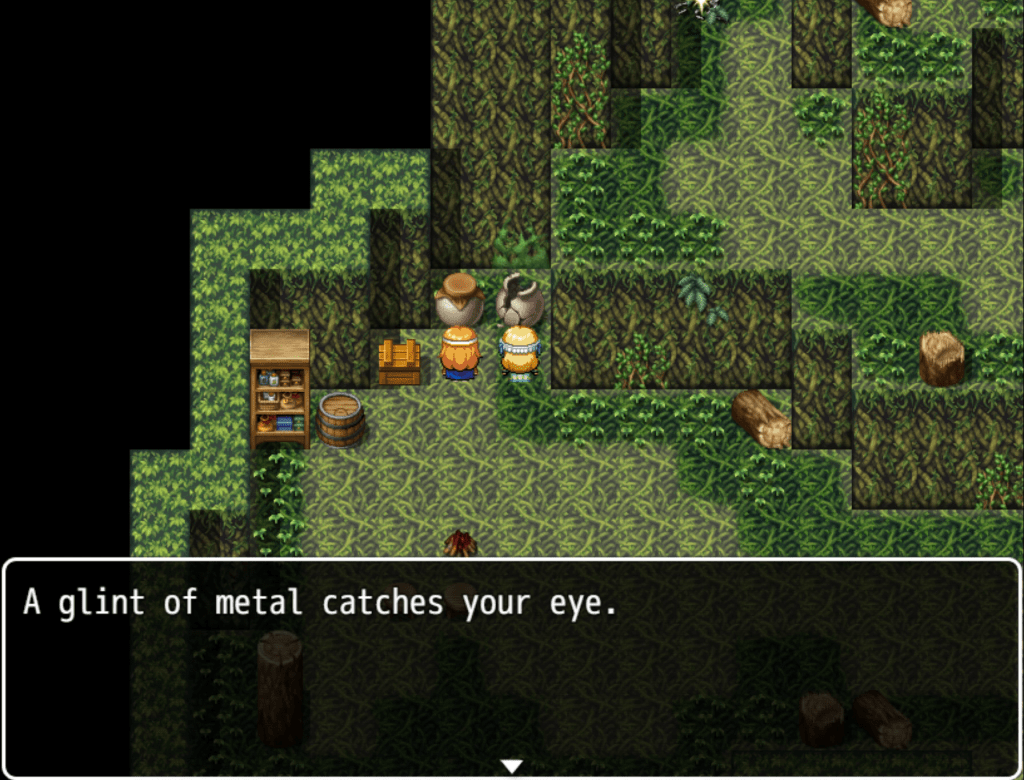
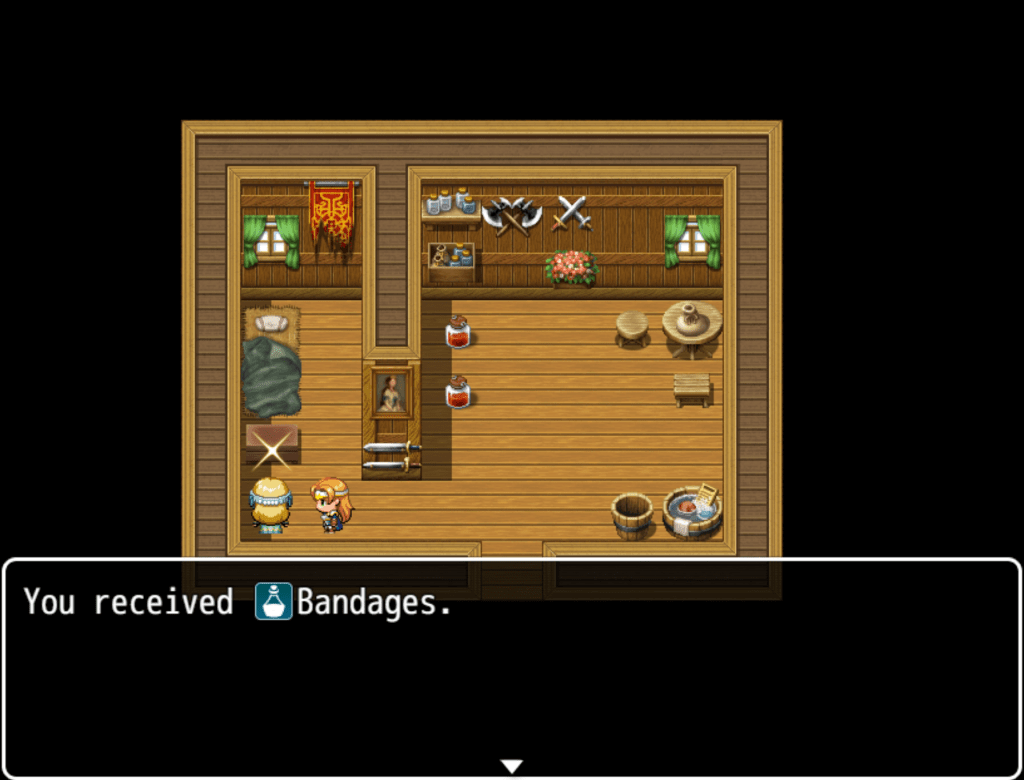
Examples of Finding Rewards

 Elhora Davis Game Design